
Have you ever noticed a faint duplicate image in your mirror, almost like a shadow sitting beside the real reflection? This phenomenon is known as double reflection, and it’s a common characteristic of traditional mirrors.
While it may not be noticeable during everyday use, double reflection can create image distortion that becomes problematic in applications requiring precision. In this article, we’ll explore the difference between standard mirrors and first surface mirrors, explain why ghosting occurs, and show how first surface mirrors deliver crystal-clear reflections.
What Causes Ghosting in Standard Mirrors?
Most household mirrors are known as second surface mirrors. In these mirrors, the reflective coating is applied to the back side of a sheet of glass.
When light reaches the mirror, two reflections occur:
- A small amount of light reflects off the front surface of the glass.
- The remaining light passes through the glass, reflects off the metallic coating on the back, and then travels back through the glass to your eyes.
Because these two reflections occur at slightly different positions, they create a faint secondary image, often called a ghost image.
This effect is responsible for the blurry edges or subtle double images you may notice when looking closely at objects reflected in a standard mirror.
Why Double Reflection Matters
For everyday applications such as bathroom mirrors, bedroom mirrors, and decorative mirrors, ghosting is generally not a significant concern.
However, when precision is important, double reflection becomes a problem. Since light must travel through the glass twice, image clarity is reduced and optical distortion is introduced. Even a small amount of ghosting can negatively affect accuracy in scientific, industrial, and professional applications.
How First Surface Mirrors Eliminate Ghosting
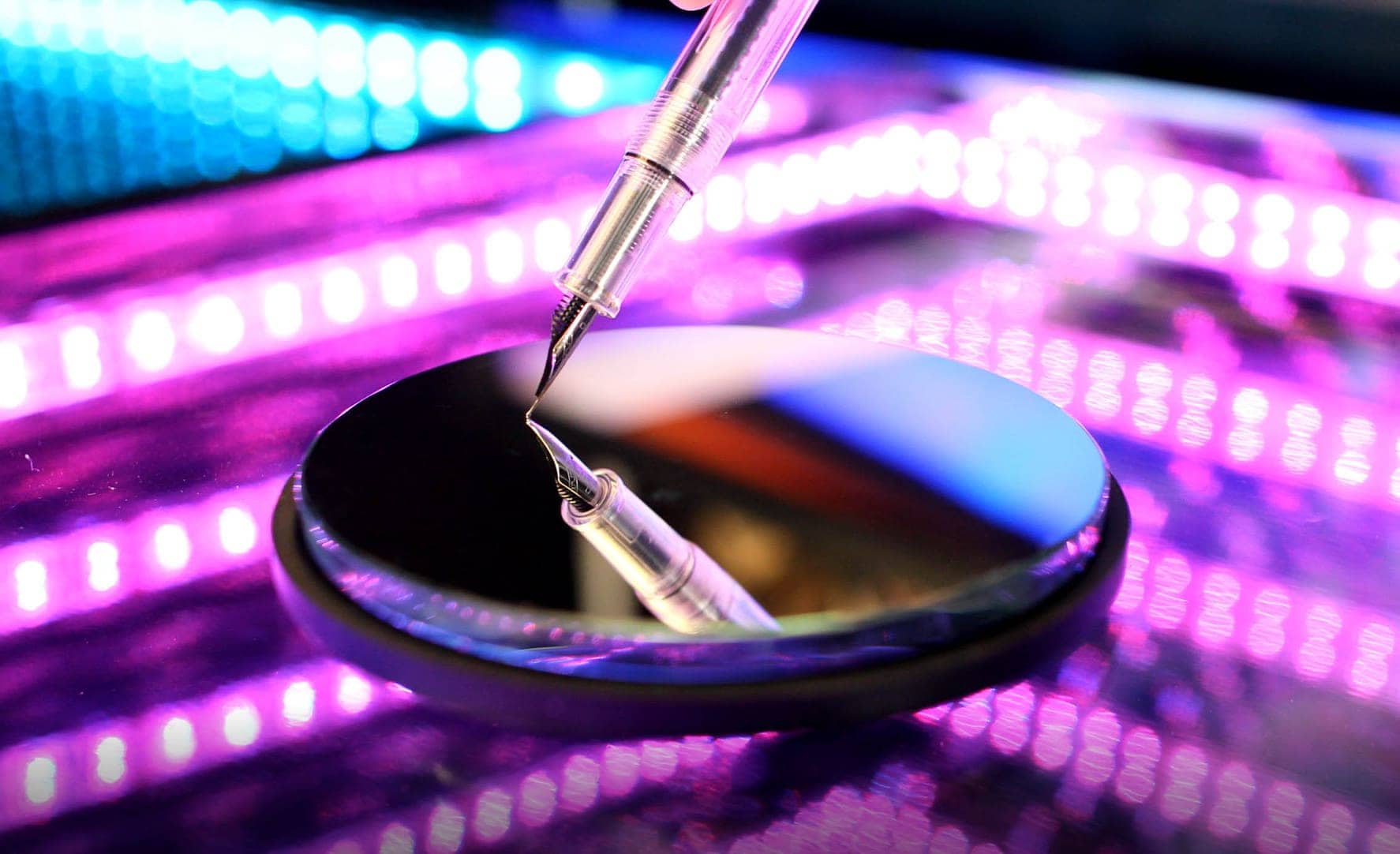
First surface mirrors solve this problem by placing the reflective coating directly on the front surface of the mirror.
Instead of passing through glass before reflecting, light bounces immediately off the reflective layer. This design eliminates the secondary reflection caused by the glass surface.
The result is:
- No ghosting
- No double images
- Reduced optical distortion
- Superior image clarity
- Greater accuracy for precision applications
Because the reflection occurs directly at the mirror’s surface, the image appears exactly where it should, producing a sharp and highly accurate reflection.
Comparing First Surface and Second Surface Mirrors
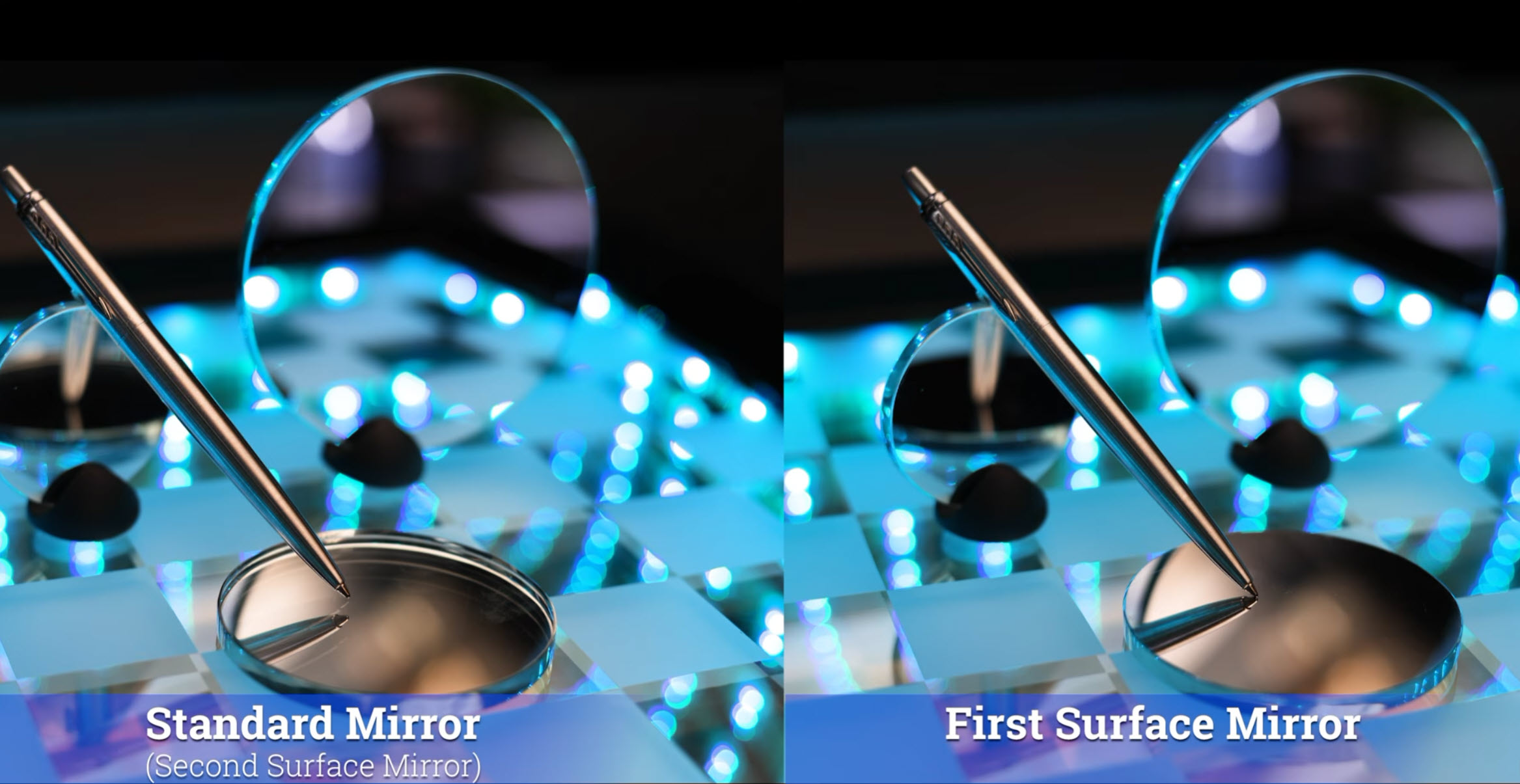
When viewed side by side, the difference is easy to see.
A standard second surface mirror often produces a faint double edge around reflected objects. This can make images appear slightly fuzzy or less defined.
A first surface mirror, on the other hand, produces a single, razor-sharp reflection with exceptional clarity. This optical accuracy is why first surface mirrors are the preferred choice for technical and professional applications.
Common Uses for First Surface Mirrors
Because of their precision and image quality, first surface mirrors are used in a wide range of industries and technologies.
Some common applications include:
- Barcode scanners and retail checkout systems
- Flight simulators and pilot training equipment
- Professional photography and videography
- Telescopes and astronomical instruments
- Laser systems and optical equipment
- Scientific research instruments
- Projection systems
- Stage magic and optical illusions
In many of these applications, even a tiny optical error can significantly impact performance, making first surface mirrors the ideal solution.
One of the most popular DIY projects using first surface mirrors is building a kaleidoscope. Because first surface mirrors eliminate the ghosting and double reflections found in standard mirrors, they create crisp, seamless patterns that appear brighter and more symmetrical. By arranging multiple mirrors at precise angles, hobbyists can generate stunning geometric designs that shift and multiply as the viewing angle changes.
Handling and Care Considerations
While first surface mirrors offer superior optical performance, they require more careful handling than standard mirrors.
Since the reflective coating is exposed on the front surface, it is more susceptible to scratches and damage. Many first surface mirrors feature protective coatings, such as enhanced aluminum coatings, to improve durability and performance.
Even with protective treatments, proper handling is essential. Always use appropriate safety equipment when working with glass and mirrors, and avoid touching or cleaning the reflective surface with abrasive materials.
Learn More About First Surface Mirrors
If you’re interested in learning more about first surface mirrors or purchasing one for your next project, visit Two Way Mirrors for detailed product information, technical specifications, and application guidance.
Whether you’re building an optical illusion, designing a scientific instrument, or simply seeking the highest-quality reflection possible, understanding the difference between first surface and second surface mirrors can help you choose the right solution.